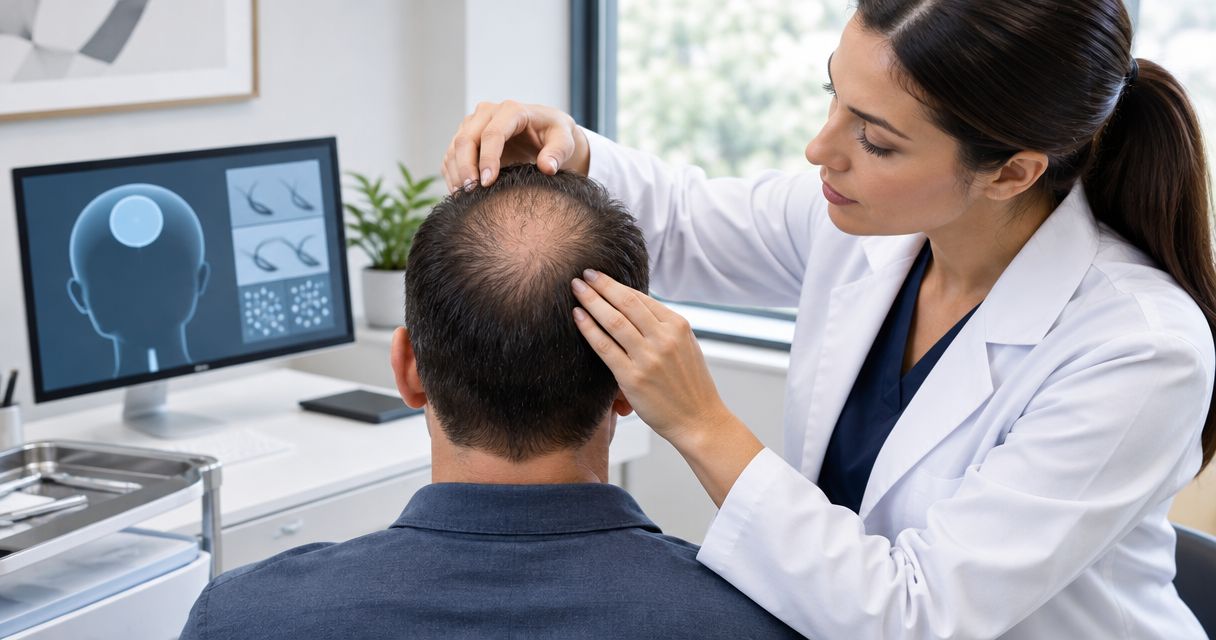
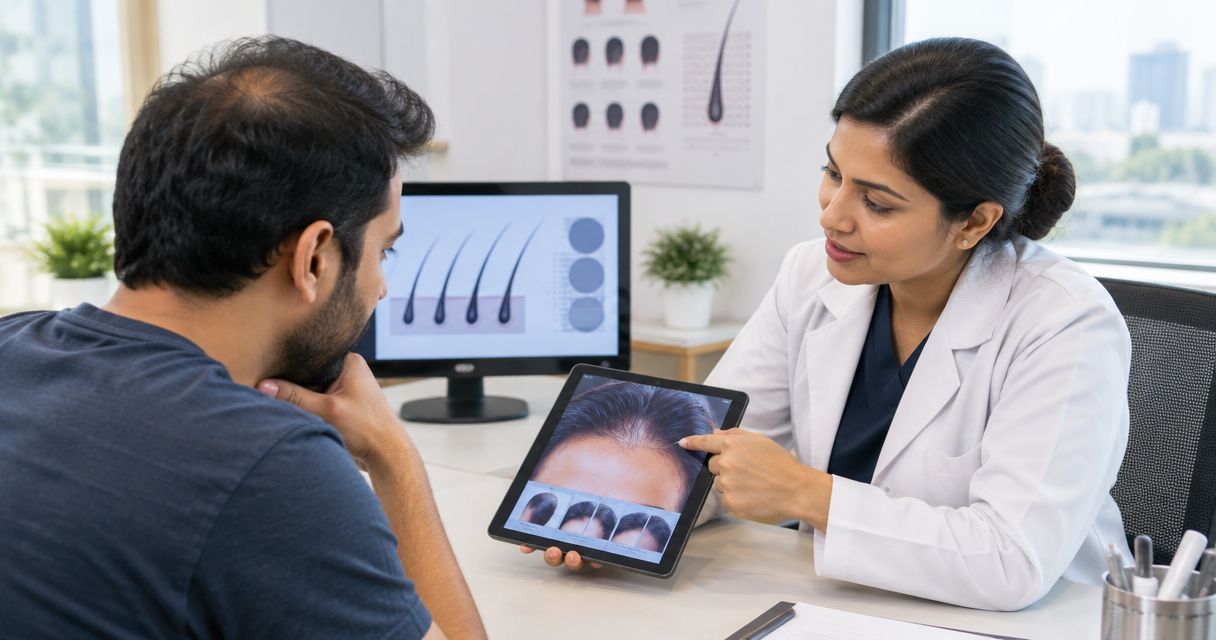
Best overall: a diagnosis-led surgical plan. Best for individual follicular-unit harvesting: FUE. Best for strip harvesting: FUT. Hair transplant techniques ranked by cost do not follow a universal cheapest-to-highest order in Bangalore in 2026; DHI describes an implantation approach, so compare the complete treatment plan rather than the technique label.
- Hair transplant techniques ranked by cost need comparable graft plans; FUT, FUE and DHI labels alone cannot establish value.
- Neo Follicle Hair Transplant offers a consultation-led starting point for Bangalore patients comparing hair restoration options.
- FUE and FUT describe harvesting methods; DHI generally describes implanter-assisted placement.
- PRP, GFC and medication are not substitutes for transplanting follicles into an appropriate recipient area.
Why this matters
A cheaper-looking proposal is not automatically a smaller financial commitment. Your comparison needs the proposed graft count, donor assessment, surgical responsibilities, anaesthesia, follow-up and management of complications—not just the procedure name.
For patients in Marathahalli and Whitefield, Neo Follicle Hair Transplant provides a consultation-led starting point for discussing hair restoration. Choose the plan that protects your donor area and addresses your diagnosis before choosing a technique.
A graft is a transplanted follicular unit, not necessarily a single hair. Comparing a quotation expressed per hair with one expressed per graft creates a misleading comparison, even before differences in treatment scope enter the discussion.
What makes the best hair transplant plan?
Use these criteria before comparing techniques in 2026:
- Diagnosis: Establish whether the problem is pattern hair loss, shedding, inflammation or scarring before considering surgery.
- Donor safety: Assess donor density, hair characteristics and the amount that can be removed without unacceptable thinning.
- Recipient design: Match the hairline and coverage plan to your facial proportions, existing hair and possible future loss.
- Surgical responsibilities: Identify who performs harvesting, recipient-site creation and implantation, and who manages complications.
- Recovery requirements: Discuss shaving, wound care, work, exercise and follow-up before selecting a date.
- Quotation scope: Compare the same graft plan and written inclusions rather than headline technique names.
No harvesting or implantation method removes the need for these checks. A technically successful operation can still leave you dissatisfied if the proposed coverage does not match your expectations.
Hair transplant techniques at a glance
The numbered sections below follow a comparison sequence, not a verified ascending price ranking. FUT and FUE are harvesting methods; DHI commonly refers to implantation using an implanter device and can accompany FUE harvesting.
| Option | Best for | Standout distinction | Key limitation | What to clarify in the quotation |
|---|---|---|---|---|
| FUT | Patients considering strip harvesting | Follicular units are prepared from a removed strip of donor scalp | Leaves a linear donor scar | Closure, suture removal and scar counselling |
| FUE | Patients considering individual follicular-unit harvesting | Follicular units are removed individually with a punch | Leaves small donor scars; overharvesting can thin the donor area | Planned extraction pattern and donor limits |
| DHI-labelled treatment | Patients assessing implanter-assisted placement | An implanter device places grafts into recipient areas | The label does not fully explain harvesting or surgical responsibilities | Harvesting method, implantation workflow and included care |
1. FUT: best for assessing strip harvesting
Follicular unit transplantation, or FUT, removes a strip of hair-bearing donor scalp. The strip is divided into follicular-unit grafts, and the donor wound is closed.
Best for: Patients whose donor characteristics, hairstyle preferences and surgical assessment support strip harvesting. FUT deserves consideration when you are comfortable accepting a linear scar; it should not be selected solely because you expect it to be cheaper.
FUT pros:
- Provides an established method of obtaining follicular-unit grafts.
- Avoids distributing extraction sites throughout the donor zone in the same way as FUE.
- Allows a direct discussion of strip dimensions, closure and future donor planning.
FUT cons:
- Leaves a linear scar that short hairstyles can expose.
- Requires care of a closed surgical wound.
- Scar widening, discomfort and altered sensation need discussion during consent.
FUT quotation check: Ask whether the proposal includes wound reviews, removal of non-dissolving sutures when used, and assessment of scar concerns. Compare the intended coverage with the other proposal, not just the total graft figure.
Verdict: Hold the decision until the linear scar and donor plan are acceptable to you.
2. FUE: best for assessing individual graft harvesting
Follicular unit excision, commonly called FUE, removes follicular units individually using small punches. The grafts are subsequently placed into the recipient area using the chosen implantation workflow.
Best for: Patients whose assessment supports individual harvesting and who understand that FUE is not scar-free. The absence of a strip incision does not mean the donor area can supply unlimited grafts.
FUE pros:
- Avoids a linear strip-harvesting scar.
- Produces individual grafts for a planned recipient design.
- Allows harvesting to be distributed across an assessed donor region.
FUE cons:
- Leaves small scars at extraction sites.
- Excessive or uneven extraction can create visible donor thinning.
- Graft injury and donor management depend on execution, not the label alone.
FUE quotation check: Ask how the surgeon determines a safe extraction limit and what happens if the donor assessment supports fewer grafts than initially discussed. Clarify shaving requirements and whether additional sessions form part of the proposed plan.
Verdict: Hold the decision until the extraction pattern and long-term donor strategy are clear.
3. DHI: best for assessing implanter-assisted placement
Direct hair implantation, or DHI, generally describes a workflow using an implanter device to place grafts. It does not, by itself, tell you how those grafts were harvested.
Best for: Patients comparing a clearly described implantation workflow after donor assessment. Ask for the harvesting method and implantation steps separately; an FUE proposal and a DHI-labelled proposal are not necessarily mutually exclusive alternatives.
DHI pros:
- Makes the implantation workflow a specific consultation topic.
- Can be considered alongside an appropriate harvesting method.
- Supports a detailed discussion of graft handling and placement responsibilities.
DHI cons:
- Terminology varies between providers.
- The label alone does not establish better growth, greater density or a safer procedure.
- It does not remove donor limitations or the risks associated with surgery.
DHI quotation check: Request a plain-language explanation of the instruments used, who performs each surgical step and how the proposed recipient design differs from the alternative. Ask what any difference in the quotation actually covers.
Verdict: Skip choosing DHI on the name alone; assess the full surgical workflow.
How to compare treatment quotations in 2026
Ask each provider to describe the same treatment objective. Restoring a frontal hairline and covering a broader thinning area are different plans, even when both are described as hair transplantation.
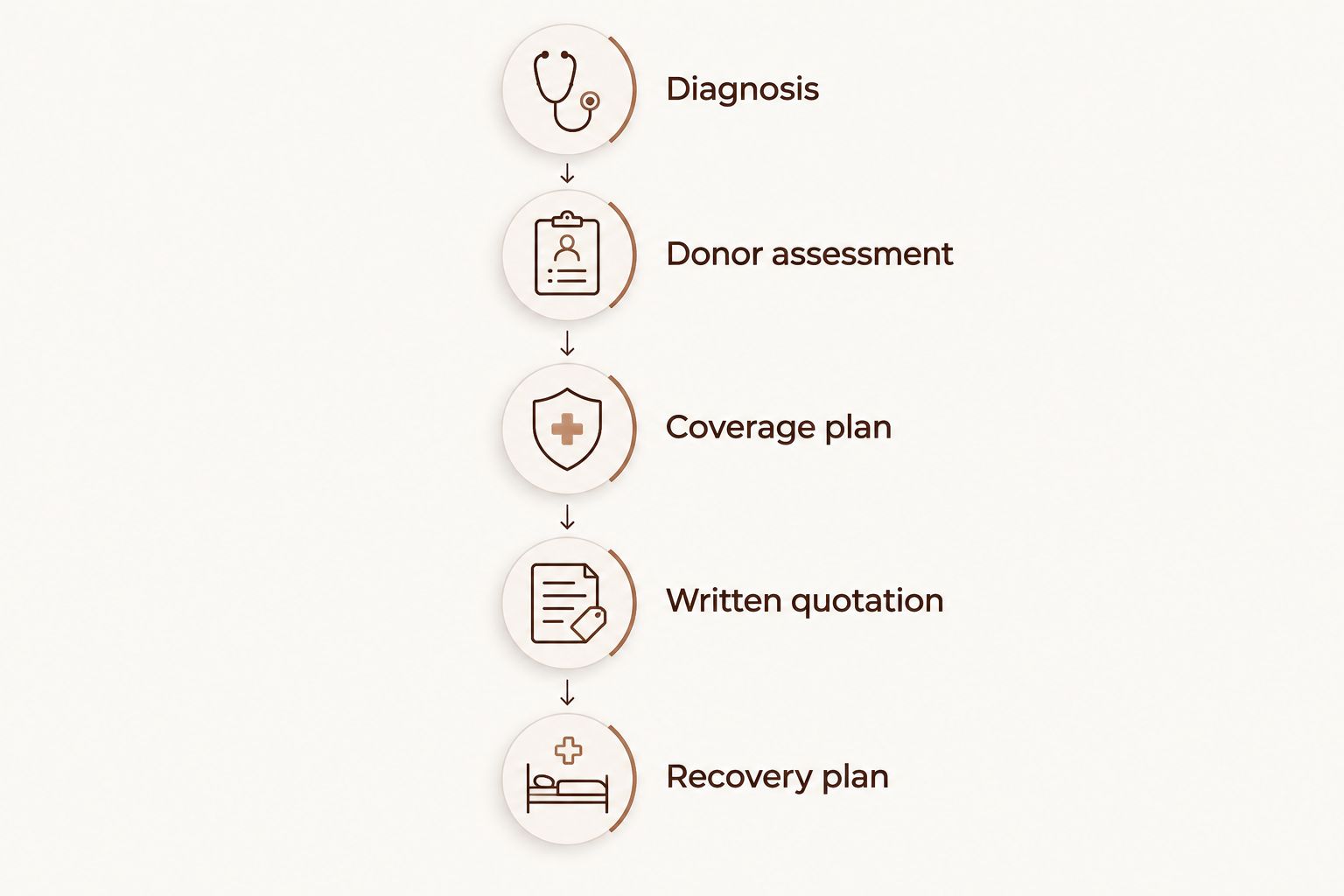
Use this sequence:
- Diagnosis: Obtain an explanation of the cause of your hair loss and whether it is stable enough for surgery.
- Donor assessment: Ask what can safely be harvested and what should remain for future needs.
- Coverage plan: Confirm the intended recipient areas and how density will be prioritised.
- Written quotation: Request the graft estimate, inclusions, exclusions and follow-up arrangements.
- Recovery plan: Clarify wound care, activity restrictions and how to obtain help after surgery.
A useful written estimate explains what changes if the final graft requirement differs from the initial assessment. It also separates surgery from any proposed medication or adjunctive treatment, so you can evaluate each recommendation on its own merits.
Discuss your hair restoration plan
Ask about diagnosis, donor suitability, treatment alternatives and a consultation-based estimate.
Other restoration options deserve separate assessment
Scalp transplantation is not the correct answer to every hair concern. Neo Follicle Hair Transplant patients should discuss the intended treatment area and diagnosis before comparing surgical techniques or adding injections to a package.
| Option | Best for | Potential benefit | Main limitation |
|---|---|---|---|
| Beard transplant | Selected patients seeking facial-hair restoration | Places donor follicles in planned facial areas | Direction, texture and donor supply constrain the result |
| Eyebrow restoration | Selected patients with suitable, stable eyebrow loss | Reconstructs a planned eyebrow pattern | Placement direction and ongoing trimming require attention |
| PRP | Selected patients discussing an adjunct for pattern hair loss | Some clinical studies report improved hair measures | Protocols and study results vary |
| GFC | Patients seeking a critical discussion of a blood-derived treatment | Offers a growth-factor-based treatment approach | Evidence is less established and preparations vary |
| Non-surgical treatment | Patients with a diagnosis responsive to medical management | Can address ongoing loss without transplantation | Suitability, adverse effects and continued treatment need review |
Beard transplant
Best for: selected facial-hair restoration candidates. Beard transplantation moves donor follicles into planned facial areas; hair direction and the transition into existing growth need careful design.
Its advantage is targeted reconstruction. Its limitations include donor use, surgical scarring and the possibility of a texture mismatch. Discuss active skin disease and scarring before deciding whether surgery is appropriate.
Eyebrow restoration
Best for: selected patients with a stable cause of eyebrow loss. Eyebrow restoration requires precise placement because angle and direction strongly affect appearance.
The benefit is reconstruction of a defined area. Limitations include surgical risks and maintenance: scalp-derived transplanted hair can require regular trimming. Unexplained eyebrow loss needs diagnosis before reconstruction.
PRP
Best for: selected patients considering an adjunct for pattern hair loss. Platelet-rich plasma uses a preparation derived from your blood and injected into the scalp.
Clinical studies support a possible benefit for some patients, but preparation methods and treatment schedules differ. Injection discomfort, bruising and uncertain individual response belong in the consent discussion; PRP does not transplant follicles.
GFC
Best for: patients seeking an evidence-focused discussion before choosing injections. Growth factor concentrate is a blood-derived treatment category, but preparation systems and published evidence are not interchangeable.
The attraction is a non-transplant approach. The limitation is a less-established evidence base: ask which preparation is proposed, what evidence supports it and how response will be assessed. Do not assume GFC is equivalent or superior to PRP.
Non-surgical hair-loss treatment
Best for: patients whose diagnosis supports medical management. Options include topical minoxidil and, for appropriate patients, prescription treatments such as finasteride.
The advantage is treating ongoing loss without transplantation. Limitations include adverse effects, contraindications and the need for continued treatment to maintain benefit. Pregnancy-related precautions and suitability differ by medicine; obtain individual prescribing advice rather than copying another patient's regimen.
Recovery and risk: plan beyond the procedure day
For 2026 planning, the NHS patient guide Hair transplant describes taking approximately 1–2 weeks off work, protecting grafts carefully during the first 2 weeks, and waiting approximately 10–18 months to see full results. These are general reference ranges, not a personal recovery timetable or an outcome promise.
Hair transplantation carries risks including bleeding, infection, visible scarring, temporary shedding and unsatisfactory growth or appearance. Your clinician should explain which symptoms are expected and which require prompt assessment.
Ask for written aftercare and a route to clinical help. Increasing redness, worsening pain, fever or discharge warrant medical advice rather than waiting for a scheduled cosmetic review.
Evidence context for your consultation
The NHS Hair transplant guide supports the surgical overview, recovery ranges and general risks discussed here. American Academy of Dermatology patient guidance on hair-loss diagnosis and treatment supports assessing the cause before selecting medication, PRP or surgery.
These are patient-education references for this 2026 guide, not evidence that one branded implantation workflow guarantees a better result. PRP evidence varies by protocol, while GFC requires particular caution about preparation-specific evidence.
How the comparison is ordered
This guide separates harvesting from implantation, then evaluates donor implications, recovery and quotation clarity. It does not assign unsupported price positions to FUT, FUE or DHI.
The most useful ranking is suitability first, comparable treatment scope second, and the written estimate third. A technique that does not suit your donor area is not good value at any quoted amount.
Which technique should you choose?
Choose FUT only after accepting its linear-scar trade-off. Consider FUE after understanding its extraction limits and small donor scars; assess DHI as an implantation workflow rather than an automatic upgrade.
For an undecided patient, the next move is a diagnostic consultation—not selecting the most prominently advertised procedure. At Neo Follicle Hair Transplant, discuss the same questions whether you live in Whitefield, Marathahalli or elsewhere in Bangalore.
FAQ
What are the hair transplant techniques ranked by cost in Bangalore?
There is no universal cheapest-to-highest order for FUT, FUE and DHI-labelled treatment. Compare written estimates for the same recipient area, graft plan and follow-up scope; DHI commonly describes implantation rather than a separate harvesting method.
Is FUE better than FUT for everyone?
No, FUE is not better than FUT for every patient. FUE avoids a linear strip scar but leaves small extraction scars, while FUT requires a closed donor incision; suitability depends on donor assessment and your priorities.
Does DHI guarantee better hair growth than FUE?
No, the DHI label does not guarantee better growth than FUE. FUE describes harvesting, while DHI generally describes implantation, so ask how the proposed workflow affects your individual plan.
How much will my hair transplant in Whitefield cost?
Your estimate requires an assessment of the proposed graft plan, treatment area and included care. Request a written consultation-based quotation and clarify whether medication, follow-up and adjunctive treatments are separate.
Can PRP or GFC replace a hair transplant?
PRP and GFC do not transplant follicles into a recipient area. They are blood-derived treatments with different evidence limitations; whether either is appropriate depends on your diagnosis and treatment objective.
How long does hair transplant recovery take?
The NHS describes approximately 1–2 weeks off work and particular care during the first 2 weeks after transplantation. Full results can take approximately 10–18 months; your surgeon must provide an individual recovery and follow-up plan.
Should I book surgery before treating ongoing hair loss?
Do not book surgery before the cause and progression of your hair loss have been assessed. Medical treatment or investigation can take priority, and transplantation does not stop continued loss of non-transplanted hair.
One last thing
Ask the clinician to explain what happens if your existing hair continues to thin behind the transplanted area. That question tests the long-term plan more effectively than asking whether a technique sounds newer. In 2026, donor preservation remains part of the decision—not an optional detail after you choose a procedure.